
Ah, Marketing! The intent of product placement and the consumer psychology behind the campaigns. Long day? Enjoy endless summer sips to take it all away. Short on time? All you need is a Grab & Go. Just do it! A diamond is forever! Think different! I’m lovin’ it!
In reality, are you really lovin’ it? Especially when you know the product quality McDonalds can churn out. And don’t get me wrong, I’m a sucker for a McDonalds breakfast.
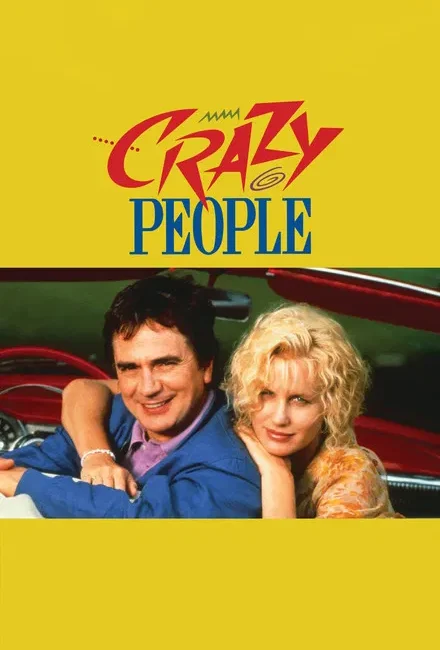
Crazy People is a film about truth in advertising—real unpolished truth:
- United Airlines: “Most of our passengers get there alive.”
- Porsche: “It’s too small to get laid in, but you get laid the minute you get out.
- Quaker Oats: “Does this cereal taste great? Who knows? But at least the box is cute.”
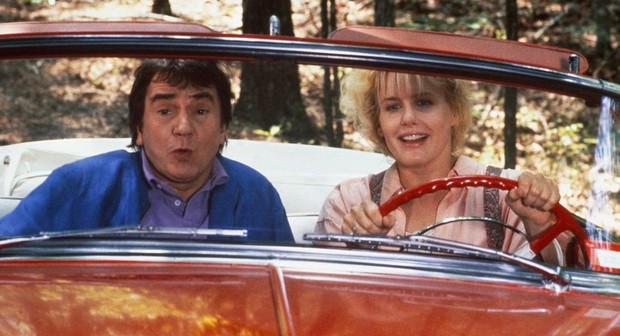
Starring Dudley Moore and Daryl Hannah, Moore is Emory Leeson, a burnt-out Madison Avenue advertising executive, who finally snaps and has a nervous breakdown after developing a truth in advertising campaign. That’s how the film begins. Overworked, overpressured, and tired of product delusion, he talks about what’s real no matter how abrasive the truth is. Stephen Bachman, played by Paul Reiser, and the rest of his colleagues have him committed to a psychiatric hospital where most of the film takes place.
At first he looks for a way out but then realizes he actually likes the place and the people, meeting a beautiful blonde patient (Daryl Hannah as Kathy Burgess), who is frightened of life. They fall in love and suddenly there’s a toss up: Which is more deranged, the mental health facility or the ad agency? What started out as a cynical comedic jab at the world of advertising and marketing turned into a love story. Leeson and Burgess do not look like your typical Rom-Com couple. Both look awkward together, but that is where the charm blossoms.
The comedy lies mostly in its second hand approach and within the antics of the patients, who turn out, inevitably, to be natural-born advertising geniuses. Leeson pulls a coup and builds an advertising team to begin pushing out this truth in advertising. Instead of backfiring, it becomes successful and CEO Drucker (played by J.T. Walsh) leads this new team purely out of greed.
Leeson sniffs out what Drucker and the head psychiatrist of the institution are doing to these patients, and he tears it all down. Leeson and Burgess escape the hospital by helicopter piloted by her brother, who helps rescue all of the patients. They end up starting up their own advertising agency, with Sony as their first client: “Sony—because caucasians are just too damn tall.”
Critics hated this film, and I mean, haaaated the film. Roger Ebert gave it two stars. Entertainment Weekly gave it a D-. The Los Angeles Times said that Crazy People deserved a better movie. The New York Times review was mixed-to-negative.
The irony? Audiences loved this movie claiming it as underrated. Dudley Moore is a delight and there are moments that are really laugh-out-loud funny, like when the public is seeing the ads for the first time.
The genesis of the film was a different story. Originally starring John Malkovich and Michelle Pfeiffer, who was his real-life girlfriend at the time, Crazy People took on a different approach until director and writer, Mitch Markowitz (who also wrote Good Morning, Vietnam), was fired after three days into production. Soon after, both Malkovich and Pfeiffer walked off the set. In comes Tony Bill and uncredited producer Sydney Pollack (Tootsie, Out of Africa, and so many other timeless films), who immediately signed Dudley Moore to the film.
What was ballsy about the film was that they used real company names. This led to major TV networks not airing the trailer for the film in fear of backlash while giving these companies free exposure. The only fake brand was a faux cigarette company called Amalfi. They decided not to go with a real company because of potentially notorious agro litigation.
For Volvo, they were initially horrified, but the slogan in the movie (“They’re boxy, but their good.”) became so successful that the car manufacturer actually leaned into their boring/boxy features and embraced the movie slogan.
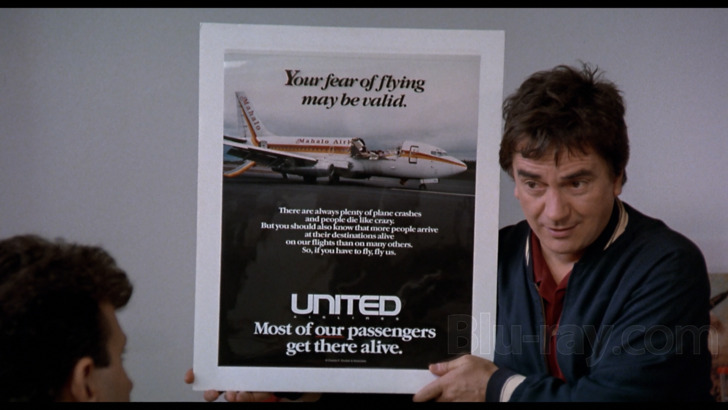
United Airlines was pissed with the capital “Pissed.” They ended up pressuring the studio and networks to pull the trailer and refused the studio service of their airlines. At the end of the film, the film executives insisted on a disclaimer, “None of the companies featured had authorized, sponsored, or endorsed the film.” But that only elevated the movie’s cult status.
Originally, the film had a grittier, more abrasive direction with the end suggesting that the ad agency was essentially “harvesting” the brains of the mentally ill forever, keeping them trapped because they were too profitable to cure. It got changed to the feel-good ending between Moore and Hannah that we see today.
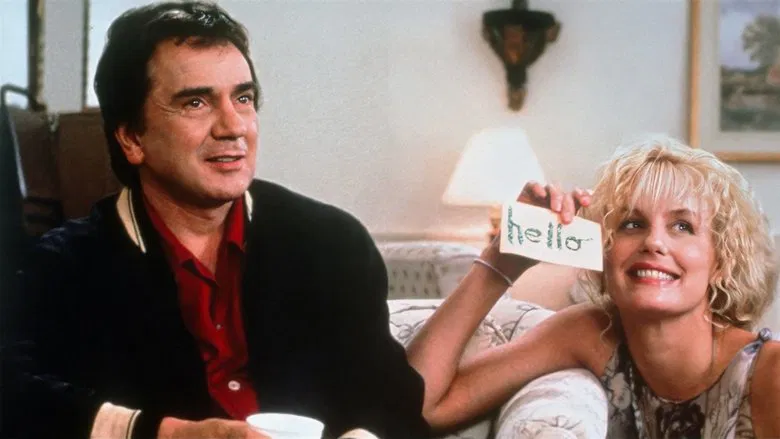
Honestly, the sappiness does not bother me and only elevates the comedic moments, especially George (played by David Paymer), who does a brilliant job randomly fusing the word “Hello” into everything he says.
I can understand the backlash compared to everything Pollack and Moore has done previously to this release, and I am actually surprised that this film was released in 1990. It feels more mid-1980s in its style. But overall it’s a feel good movie that makes you laugh in a way only Moore can make you feel, which is erratic and brilliantly composed. Whether it’s the attack on corporate America or a positive spin on people with mental health conditions, this film infuses humanity under idiotic and relentless conditions. Beyond production, not once did I feel the film is dated. If only real life was more honest with itself.

Other Articles

PVT—When Machine Became Man
Film School by Eddie Schwartz

No Comment! Be the first one.