

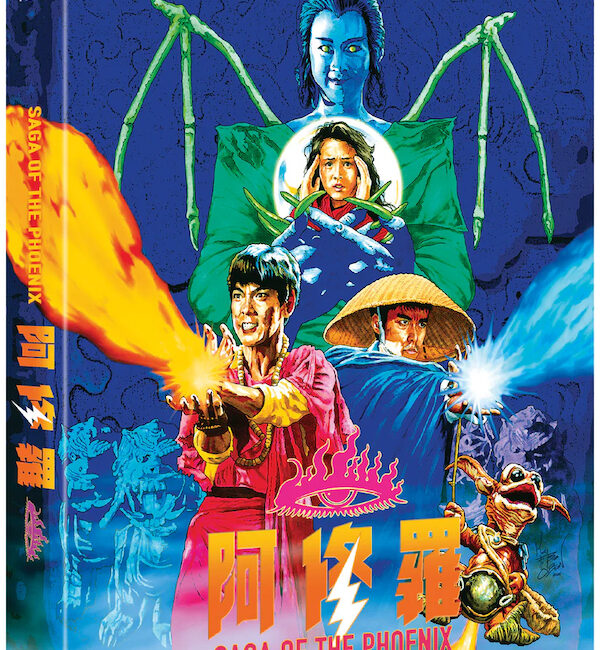
From packaging to film quality, 88 Films has done a magnificent job of preserving the essence of 1990’s Saga of the Phoenix, meticulously cleaning up the film grain while keeping the neon colors of the 1990s vibrant. This is as much a glorious representation of Japanese-Hong Kong co-productions of its time as it is a visual showpiece.
What resulted was a bold experiment in a Pan-Asian melting pot combining the production muscle of Hong Kong’s Golden Harvest (the studio behind Jackie Chan and Bruce Lee) with Japanese talent and distribution. This led to an intelligent harmony of appealing to a wider audience both in Hong Kong and Japan.
Saga of the Phoenix was the sequel to Peacock King, a film that was a rarity for its time because of its direct correlation to the era’s love of manga and its adaptation of Makoto Ogino’s Kujaku Ō. This was during a period when characters were deeply influenced by the golden age of manga and the subsequent “video manga” (OVA) boom that flooded the market in the 1980s.
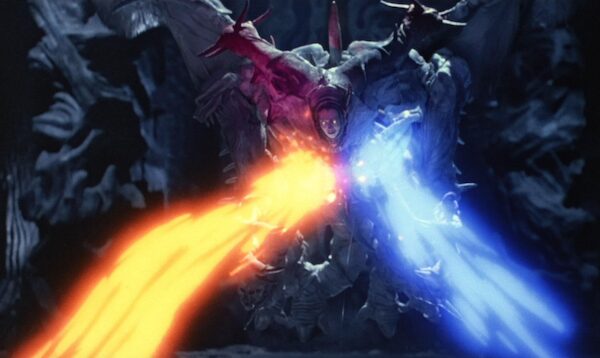
The film exists as a result of a speedy follow-up to its predecessor. The story picks up exactly where Peacock King ended, right in the midst of the “Hell’s Concubine” arc. The use of effects is outstanding, utilizing color as much as a weapon as the eclectic choreography and movements. The stop-motion of Tricky Ghost—a Gremlin-like creature—is executed so well that it blends flawlessly with the live-action characters, giving off distinct Mac and Me vibes. The film sat at the edge of a cliff before CGI fully encompassed Hong Kong cinema; it remains a “last gasp” relic of high-quality practical effects.
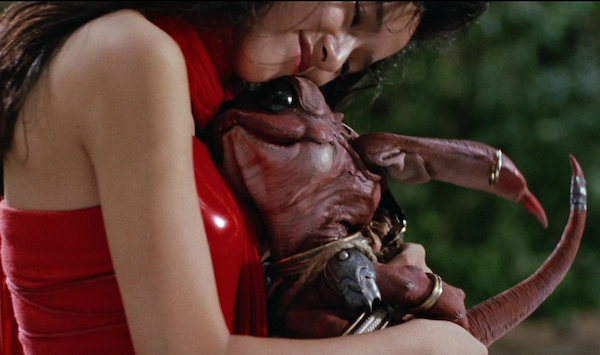
There is so much quirkiness within the film that it leaves you intrigued as to which door they will open next and what dimensional qualities will delight you. This era ignited a plethora of manga film adaptations, such as Peter Mak’s The Wicked City or Lee Lik-Chi’s Love on Delivery.
There’s a distinct Yin and Yang balancing out the narrative. You experience a dramatic underworld that exists parallel to the world that Ashura (played by Gloria Yip) bounces between. What transpires is nothing short of schlocky—highlighted by the “odd couple” relationship of the two monks, Yuen Biao’s physical comedy, and his incredible acrobatics—yet it remains curiously intriguing and downright mesmerizing. Saga of the Phoenix was a blinding center point of pop culture.
Accompanying this collection are two detailed essays that build perspective on Asian cinema, both historically and as a reference point. A single review cannot do justice to the sheer amount of cross-pollination and the myriad of Asian films that inspired this work. Saga of the Phoenix maintains its magic while opening us to the vast world of cinematic history that surrounds it.

Other Articles
Arctic Moon by Chameleons
Instant Comfort by Lucid Express
No Comment! Be the first one.